
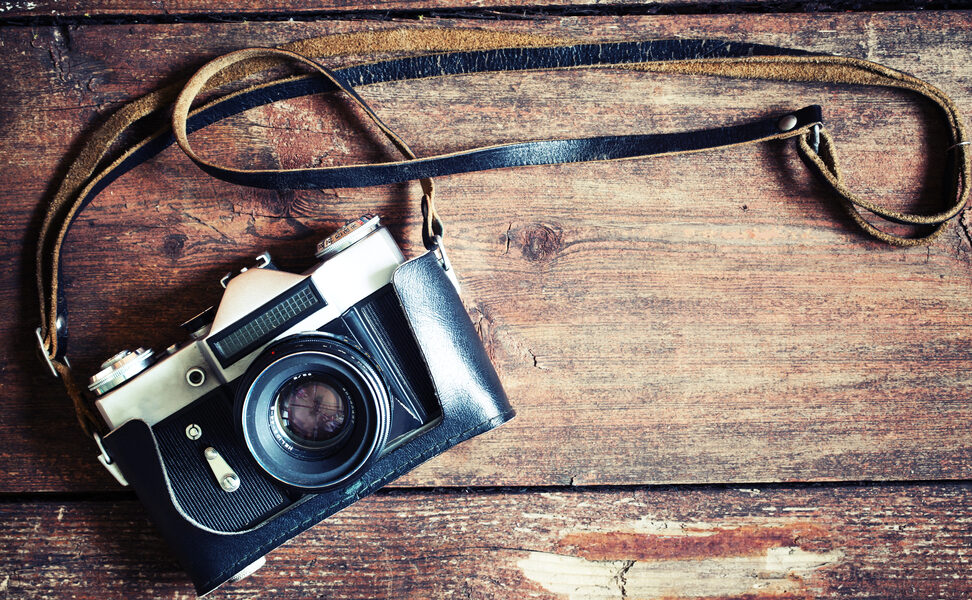
So you love to hit the road, travel to new cities, and explore new things, BUT… your phone’s camera just isn’t capturing the real essence of the trip. Maybe it’s time to upgrade to a more professional-grade camera to take with you on your next adventure. Before going out and buying the first camera you see on the shelf, do some research into the camera itself, along with the basics of photography, so you can get the most out of your investment!
DSLR vs Mirrorless Cameras
First things first: which type of camera is best suited to your needs? There are two main types of cameras that can affect the way you take pictures. First, you have digital single-lens reflex (DSLR) cameras. Inside the DSLR camera, there is a mirror that reflects light coming into the lens to a prism and onto the screen so you can preview your shot. Once you click the shutter button, the mirror flips up to hit the light and capture the final image. In a mirrorless camera, the light passes directly through to the image sensor which sends the picture directly to the viewfinder screen. Unless you’re really going to dive into the realm of photography, a mirrorless camera will probably suffice. They tend to be a bit more compact than a DSLR.
Now that you have a camera, what really goes into taking the perfect picture? It’s surprisingly not as easy as just pressing a button. To up your photo skills, below are some factors to keep in mind.
Exposure
Exposure is composed of three main parts; aperture, shutter speed, and ISO. The aperture is the hole inside the lens. Just like the pupil in your eye, the wider this gets the more light is allowed in and the brighter the picture will get. Shutter speed is exactly like what it sounds. Once the light has passed through the aperture, you need to determine exactly how much light you want to let in. Shutter speeds can range from 1/4000 of a second (to catch an instant without blur) to a full 30 seconds (best for night photography). ISO is how sensitive your camera is to the light you have just let in. If you increase the ISO too much your photo quality can decrease.
Focus
Almost every camera nowadays has an autofocus feature which can make your life easier. That being said, sometimes you want to focus on a particular subject. This is one of the main features to play with whether you’re on a mountain top or taking a still shot of an orange on a table.
Keep reading up on photography, take a class or two and go out there to start capturing the moment! Take your newfound photography skills on the water to these amazing fishing spots across the USA.
