
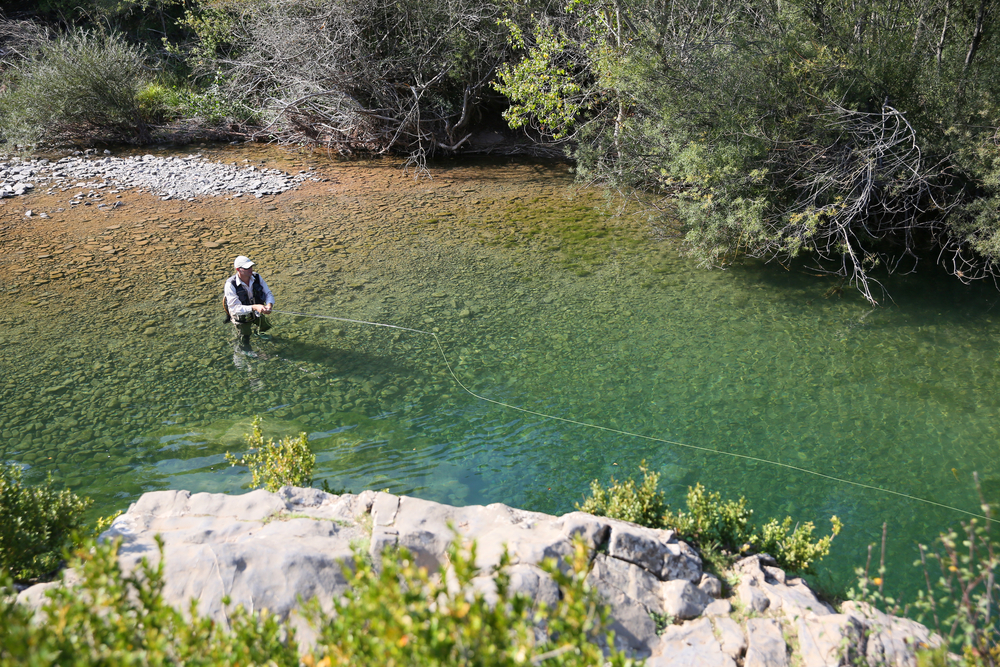
Fly fishing is a method of fishing in which a plastic or handmade “fly” is used to catch fish in rivers or streams.
The fly is cast using a rod (traditionally bamboo), reel, and weighted line (depending on the fish you are after). There is a specific technique of casting designed for a practically weightless lure like a fly. If the idea of fly fishing has you interested, find some tips to get you started below!
When looking for a rod you need to be aware of the rod’s length weight and action.
How you go about deciding on these variables depends on the type of fish you want to be catching. Your choice of reel is also important. If you go to a sporting goods store, an untrained eye may see an entire aisle of the exact same reel. Higher-quality materials give you better drag control, which can be instrumental in landing a trophy fish. Graphite is the best but usually the most expensive. Fiberglass is what most rods are made of or you can go the traditional route of bamboo. The weight of your fly line is going to depend on the weight of your rod. Usually, there is a +/- 1 rule when it comes to choosing the right line. Determined by the kind of fish you are trying to catch, you should be able to pick a suitable line (heavy line for bigger fish, lighter line for smaller fish). Let’s say you have a 4wt rod, then you should pick a 4, 5, 6, or 7 fly line. Sticking to this rule will help you keep balance and make casting easier.
Learning to cast on the water is going to result in a lot of empty and annoying trips as you send fish swimming away from your line and lure-smacking the water above them.
Spend a few hours in the backyard practicing with your new equipment to make sure you don’t get frustrated on the water. Like any kind of fishing, patience is key.
Once you’re just about ready to get in the water and start casting, visit a local bait or fly shop.
The fishermen there should be able to give you an idea of where the fishing is hot, when and what is hatching, and just good fly-fishing advice in general. Some fly-fishing masters could even show you how to make your own flies! Now that you have a good fly-fishing knowledge base, the right equipment, and some backyard practice, it’s time to take your craft to the water. Good luck and happy fishing!
Cast a line at one of these best fishing spots across America. Check ’em out!
